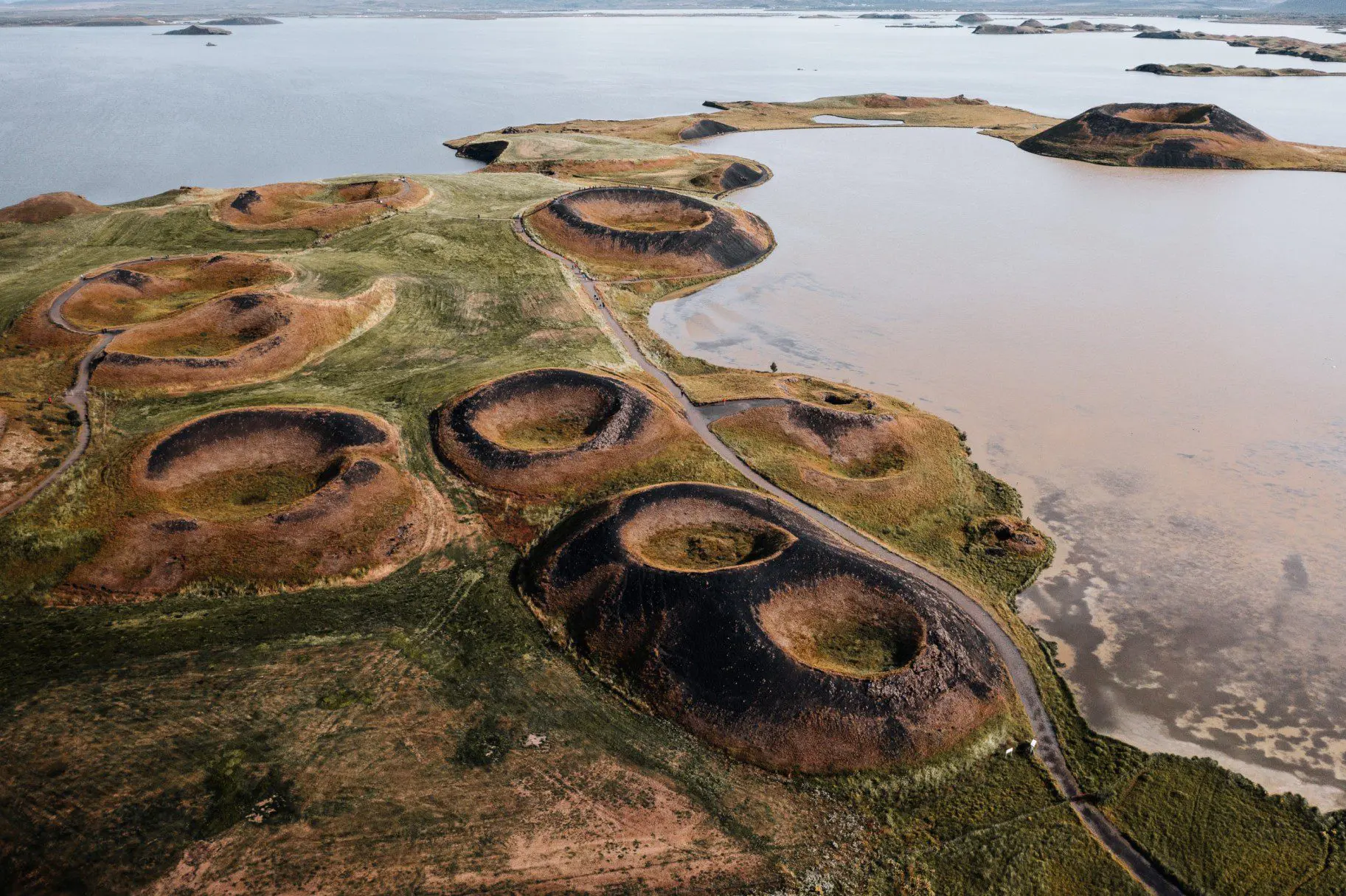
Few countries showcase the power of the Earth as well as Iceland. The island has more than 30 active volcanic systems, and these Icelandic volcanoes have shaped the landscapes over the centuries.
From vast fields of black lava to steaming craters and snow-covered volcanic peaks, you can't explore Icelandic nature without encountering these fire giants. In this article, we'll take you on a journey to discover Iceland's most impressive volcanoes and the natural wonders that surround them.
Katla: the Icelandic volcano sleeping under its glacier
Among the most famous and monitored volcanoes in Iceland is undoubtedly Katla. This volcano lies beneath the Mýrdalsjökull glacier in the south of the country and is known for its powerful eruptions that can cause significant flooding due to melting ice.
Even though Katla has remained relatively calm for several decades, it is under constant monitoring by volcanologists.
The area around Katla features several must-see sites:
- Reynisfjara: the famous black sand beach shaped by volcanic activity in the region over the centuries.
- Dyrhólaey: an impressive rock arch offering stunning views of the coast and the Atlantic Ocean.
- Mýrdalsjökull Glacier: a perfect spot for glacier hiking or snowmobiling, with the Katla volcano literally beneath your feet.
- Vík í Mýrdal: a charming coastal village that serves as an excellent base for exploring the surroundings.
If you're planning a road trip in Iceland along the south coast, make sure to set aside enough time to explore this exceptional region.
Eyjafjallajökull: the Icelandic volcano that paralyzed Europe
In 2010, this volcano became globally famous when its eruption and ash cloud disrupted air traffic across Europe for several weeks.
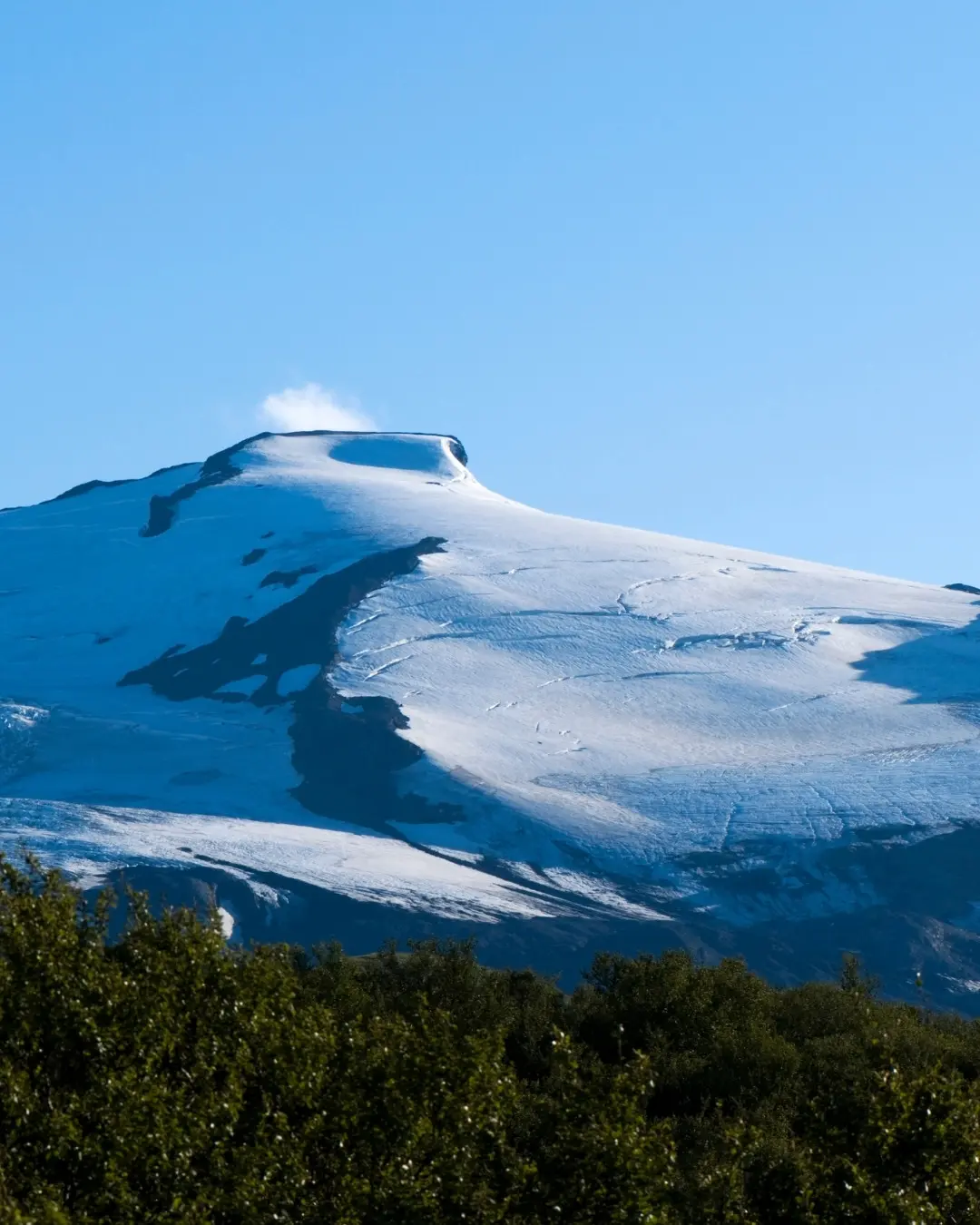
Eyjafjallajökull is one of the most fascinating Icelandic volcanoes for travelers, especially because it lies beneath a glacier of the same name.
Nearby, you can explore:
- Skógafoss and Seljalandsfoss: two iconic waterfalls located a short distance from each other.
- Þórsmörk: a stunning highland area with lush valleys, accessible by 4x4.
- The Lava Centre and local information centers: great spots to learn more about the 2010 eruption and Iceland's volcanic history.
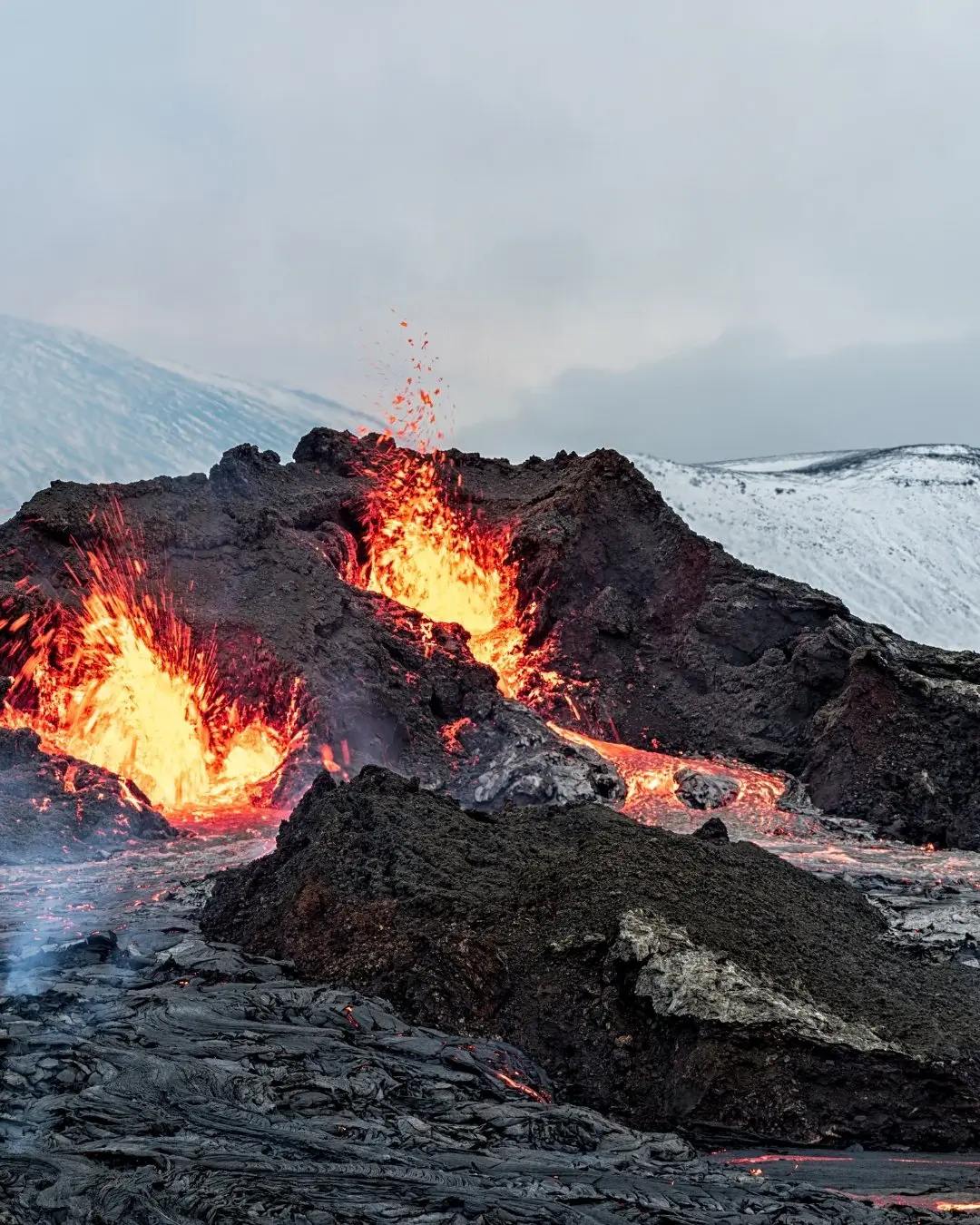
Fagradalsfjall: the youngest volcano in Iceland, still active.
On the Reykjanes peninsula, not far from Reykjavik, you'll find Fagradalsfjall, a volcano that has experienced several eruptions since 2021.
This recent activity has made it one of the most visited volcanoes in Iceland in recent years, with lava fields that are still young and cooling.
The area offers:
- trails to observe new lava flows, where you can still feel the power of the Earth;
- the Blue Lagoon and the Sky Lagoon, two famous geothermal baths located in the same area;
- the Reykjanes UNESCO Global Geopark, with its craters, lava caves, and geothermal areas.
For travelers with limited time, this region is perfect for discovering Iceland's volcanic landscape without straying too far from Reykjavik.
Askja and Hekla: the wild volcanoes of Iceland's Highlands
Further in, at the heart of Iceland's desert interior, lie two other legendary volcanoes.
Hekla, once nicknamed the "gateway to hell," is one of the country's most active volcanoes. It's easily visible from certain stretches of Route 1.
Askja, located in a remote area of the Highlands, is only accessible by 4×4. It offers an almost lunar landscape with a massive volcanic crater that houses a lake where it's even possible to swim, depending on the conditions.
These two volcanoes reveal another side of Iceland: raw, vast, and almost extraterrestrial nature. This is exactly what makes a road trip in the Highlands so special for those looking to go beyond the famous Route 1.
Why the volcanoes make Iceland a unique destination
Iceland's many volcanoes haven't just created spectacular craters and lava fields. They are also responsible for:
- geothermal springs and natural baths spread throughout the country;
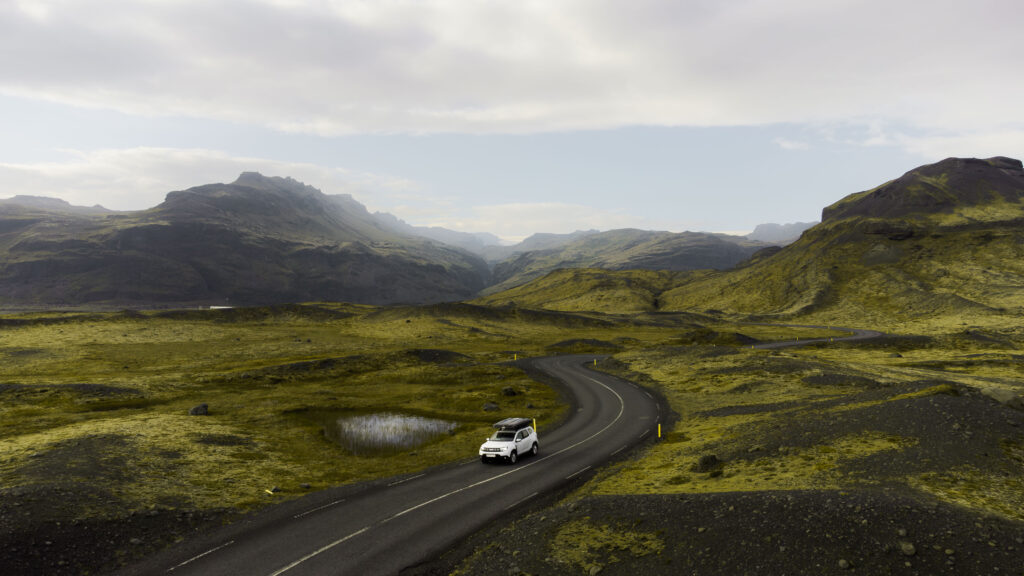
- fertile plains and lava fields covered in moss that are gradually rejuvenating;
- black sand beaches and rock formations made from solidified lava.
This meeting of fire, ice, and water makes Iceland a unique territory in the world and explains why so many travelers return year after year.
How to visit the volcanoes during your road trip in Iceland
Want to include these volcanic landscapes in your own trip to Iceland? Here are some tips:
- a 4×4 is highly recommended to access remote areas like Askja or Landmannalaugar;
- always check current volcanic and seismic activity through the Icelandic Meteorological Institute, especially in active areas like Reykjanes;
- combine several regions: from coastal landscapes around Katla to the vast volcanic expanses of Askja, to discover the full diversity of the country.
At Iceland Nomads, we create itineraries that blend Iceland's major volcanic sites with lesser-known spots, turning your trip into a true adventure of fire, ice, and rock.