Tips from the Team
- Never get too close to the edge: The rocks can be slippery and the drops are dangerous. Respect the barriers and signs.
- Dress appropriately: You'll get soaked from the spray near the big waterfalls. A waterproof jacket is a must.
- Visit early in the morning or in the evening: The iconic waterfalls get crowded in the middle of the day during summer. Plus, the light is much better.
- Allow plenty of time: Don’t underestimate the time spent at each waterfall. Between taking photos, enjoying the different viewpoints, and just soaking in the beauty…
- Trust our experts: With Iceland Nomads, we've included the most beautiful waterfalls in the optimal itinerary.
The 7 most beautiful waterfalls in Iceland that you absolutely must see
Iceland is the land of waterfalls. Hundreds of waterfalls cascade down cliffs, plunge into canyons, and flow through lush green meadows. Each one has its own character: powerful, graceful, hidden, spectacular.
With so many waterfalls, it’s tough to know which ones are truly worth the detour. Which ones deserve a stop on your itinerary? Which ones will leave you speechless?
We’re revealing our top 7 most beautiful waterfalls in Iceland, the ones you absolutely can’t miss on a road trip on the land of fire and ice.
1. Seljalandsfoss: walk behind the waterfall
South Coast, 120 km from Reykjavik
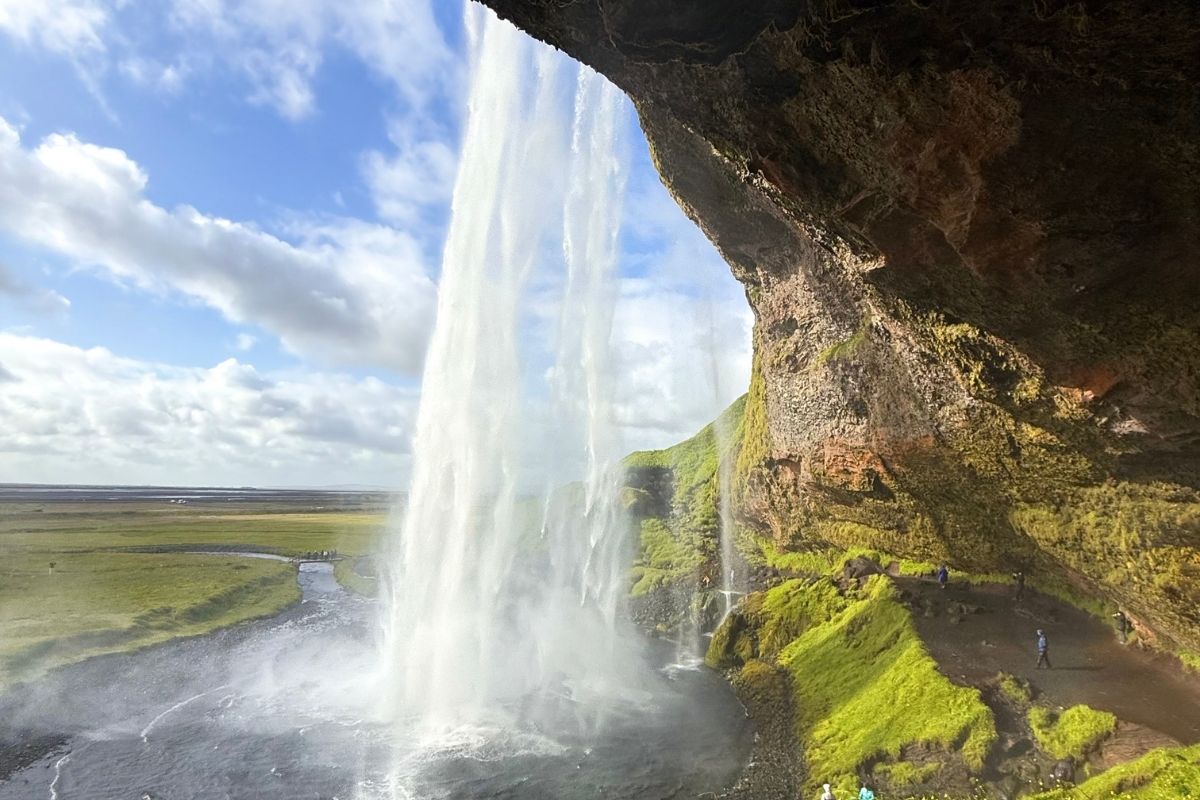
Seljalandsfoss is undoubtedly the most photographed waterfall in Iceland. And for good reason: it’s one of the few waterfalls in the world where you can walk behind the curtain of water.
The waterfall drops 60 meters from an ancient coastal cliff. A designated path (which can be wet and slippery) allows you to go behind the fall. The view from inside, with the sun filtering through the water, is magical.
At sunset, when the golden light illuminates the waterfall, it’s spectacular. This is also when it gets the most crowded. To avoid the crowds, come before 9 AM or after 8 PM in the summer.
Next: Gljúfrabúi, the hidden waterfall
Just a 5-minute walk from Seljalandsfoss is Gljúfrabúi, a secret waterfall tucked away in a cliff crevice. To see it, you have to enter the narrow canyon (you will get wet up to your knees). Many visitors miss it, but it’s definitely worth the detour.
Our practical tips
- Waterproof jacket required: you will get soaked behind the waterfall
- Waterproof shoes: the path is wet and slippery
- Visit Gljúfrabúi: 99% of people forget this hidden waterfall
- Parking fee: 800 ISK (about 5-6€)
2. Skógafoss: the perfect waterfall
South coast, 150 km from Reykjavik
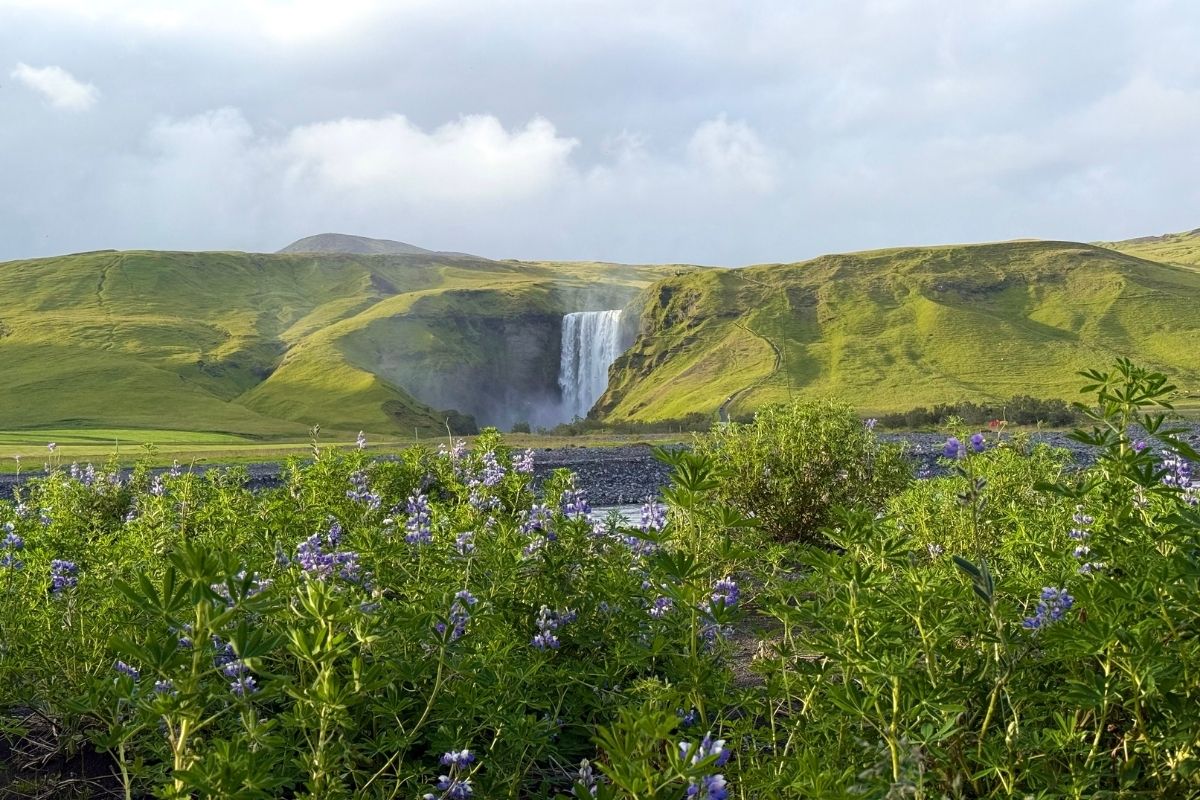
While Seljalandsfoss is the most photographed, Skógafoss is the most perfect. This waterfall, 60 meters wide and 25 meters high, has ideal proportions. It's a powerful curtain of water that generates constant mist and rainbows on sunny days.
Legend has it that a Viking treasure is hidden behind the waterfall. A chest of gold was supposedly thrown into the basin by the first settler in the area. No one has ever found it, but the story adds to the charm of the place.
Skógafoss has two spectacular viewpoints: from the bottom where you can feel the full power of the water (and get soaked by the mist), and from the top after climbing 527 steps. The view from above of the waterfall and the coastline is breathtaking.
The Fimmvörðuháls Trail
From Skógafoss starts one of the most beautiful treks in Iceland: the Fimmvörðuháls trail that crosses 25 waterfalls up to the Eyjafjallajökull glacier. If you don't have time for the full trek (2 days), at least walk to the first waterfalls (1-2 hours round trip).
Our practical tips
- Climb to the top: the 527 steps are definitely worth it
- Come early: it's one of the most visited waterfalls in Iceland
- Raincoat: the mist soaks everyone at the foot of the waterfall
- On sunny days: guaranteed rainbows in the mist
- Free parking: right in front of the waterfall
3. Gullfoss: the golden waterfall
Golden Circle, 100 km from Reykjavik
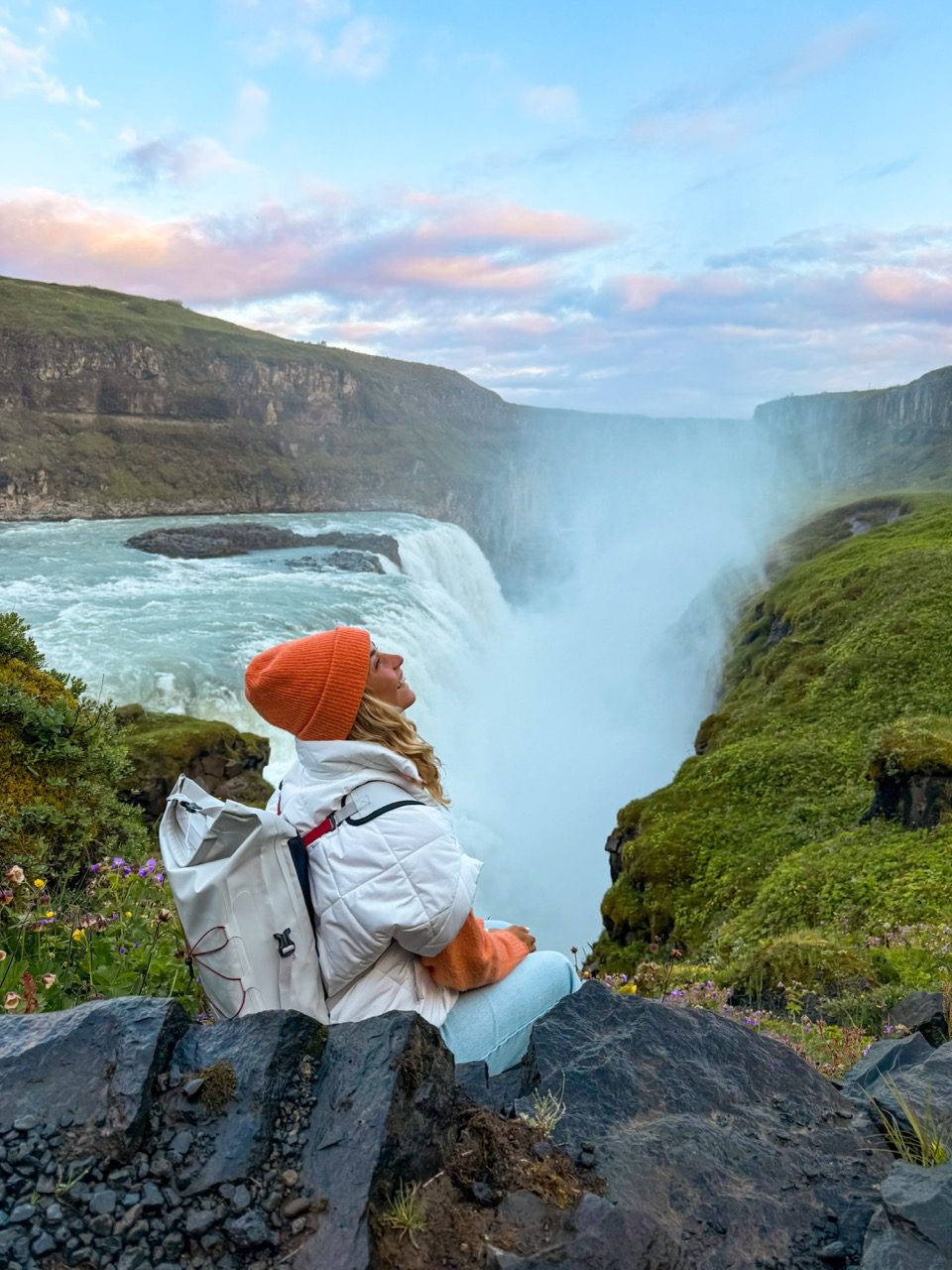
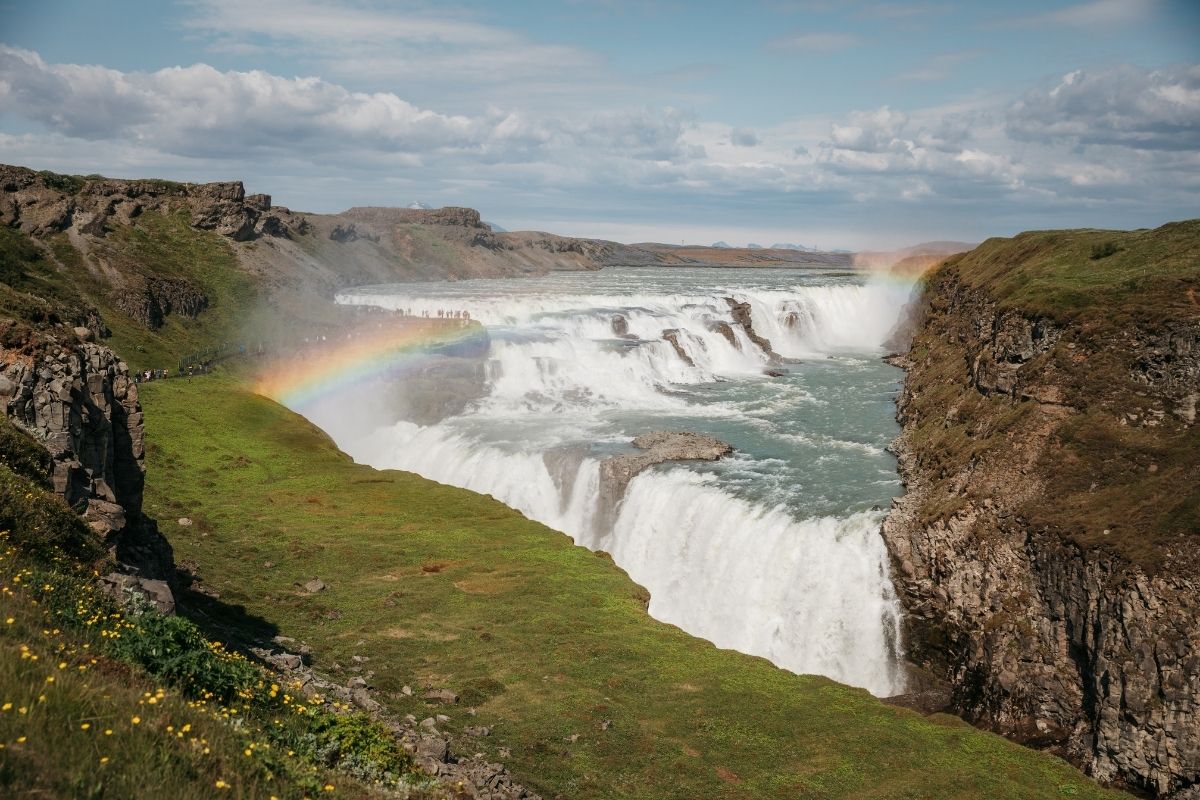
Gullfoss, the “golden waterfall,” is part of the Golden Circle, Iceland's most popular tourist route. This waterfall cascades in two levels into a deep canyon with impressive power.
The Hvítá River first drops 11 meters over one fall, then makes a 90-degree turn before plunging another 21 meters into a narrow canyon. The glacial, whitish water (hence the name “white river”) creates a hypnotic spectacle.
Gullfoss almost got destroyed for a hydroelectric project in the 1920s. A woman, Sigríður Tómasdóttir, fought for years to save it, even threatening to throw herself into the waterfall. Thanks to her, Gullfoss is now protected.
Magical Winter
In winter, Gullfoss transforms into a cathedral of ice. The mist freezes on the surrounding rocks, creating spectacular ice sculptures. The waterfall itself never freezes completely, but the contrast of ice and water is magical.
Our Practical Tips
- Two observation platforms: the upper and lower, visit both
- Strong winds: hold onto your hat and watch out for icy mist
- Very busy: this is the Golden Circle, lots of people all day
- Free parking: large parking lot with a café/shop
- Visitor center: information about Sigríður's history
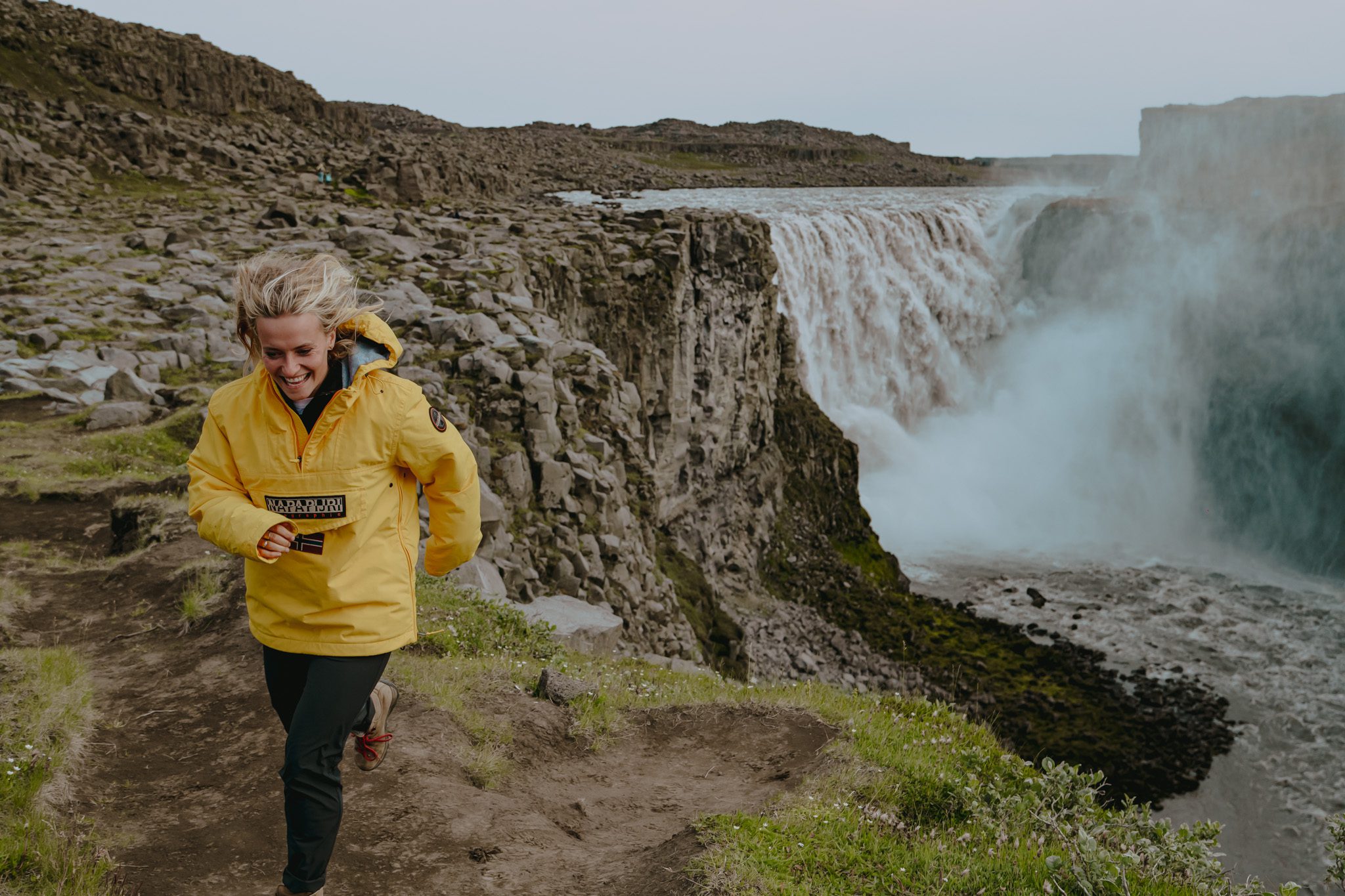
4. Dettifoss: the most powerful waterfall in Europe
Northeast of Iceland, near Lake Mývatn
Dettifoss isn't the tallest waterfall in Iceland, but it's undoubtedly the most powerful in Europe. 500 m³ of water per second cascades down 44 meters high and 100 meters wide. The roar can be heard for miles.
The gray-brown glacial water (loaded with glacial sediments) plunges into the Jökulsárgljúfur canyon with impressive brute force. The mist creates a permanent cloud above the waterfall. When the sun breaks through, rainbows multiply.
Dettifoss served as the opening scene in Ridley Scott's film "Prometheus". The scene where the Engineer disintegrates was filmed here, showcasing the epic dimension of the place.
The Two Banks
Dettifoss is accessible via two routes: the East bank (Route 864, paved) and the West bank (Route 862, unpaved). The East bank is easier to access and offers the classic frontal view. The West bank requires more effort but gets you much closer to the waterfall (and soaked by the mist).
Our Practical Tips
- Choose your bank: East for ease, West for proximity
- Protect your camera gear: the mist can damage devices
- Also visit Selfoss: a neighboring waterfall 1 km upstream, also very beautiful
- Road closed in winter: accessible only from May to October
- Plan for 2-3 hours: round trip from the parking lot to the waterfall
5. Svartifoss: the waterfall with basalt organs
Skaftafell National Park, southeast Iceland
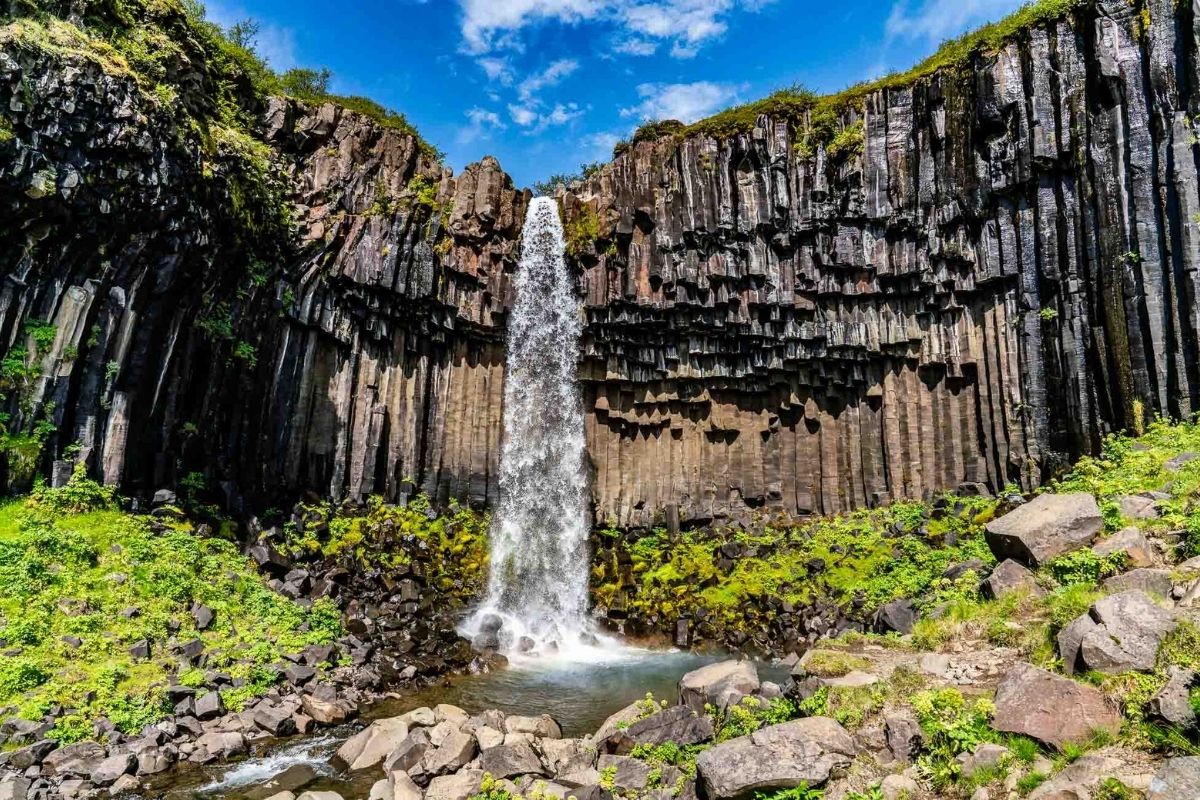
Svartifoss, the "black waterfall," plunges 20 meters amidst columns of black hexagonal basalt. These basalt columns frame the waterfall like the pipes of a giant organ, creating an almost otherworldly setting.
The waterfall itself isn't massive, but its surroundings make it unique. The basalt columns inspired the architecture of Hallgrímskirkja church in Reykjavik and the National Theatre of Iceland.
To reach Svartifoss, you need to walk 1.5 km from the parking lot (about a 45-minute walk one way). The trail steadily climbs but remains easy. Along the way, you'll pass two other small waterfalls: Þjófafoss and Hundafoss.
Skaftafell, gateway to Vatnajökull
Svartifoss is located in Skaftafell National Park, at the foot of Europe’s largest glacier: Vatnajökull. It's an excellent starting point for glacier hikes or ice cave tours in winter.
Our practical tips
- Easy hike: 3 km round trip, 1.5 hours total
- Hiking shoes: the trail can be muddy
- View from below: continue a bit past the main platform to see the columns
- Combined with glacier: take the opportunity to explore Skaftafell
- Paid parking: 750 ISK at the Skaftafell visitor center
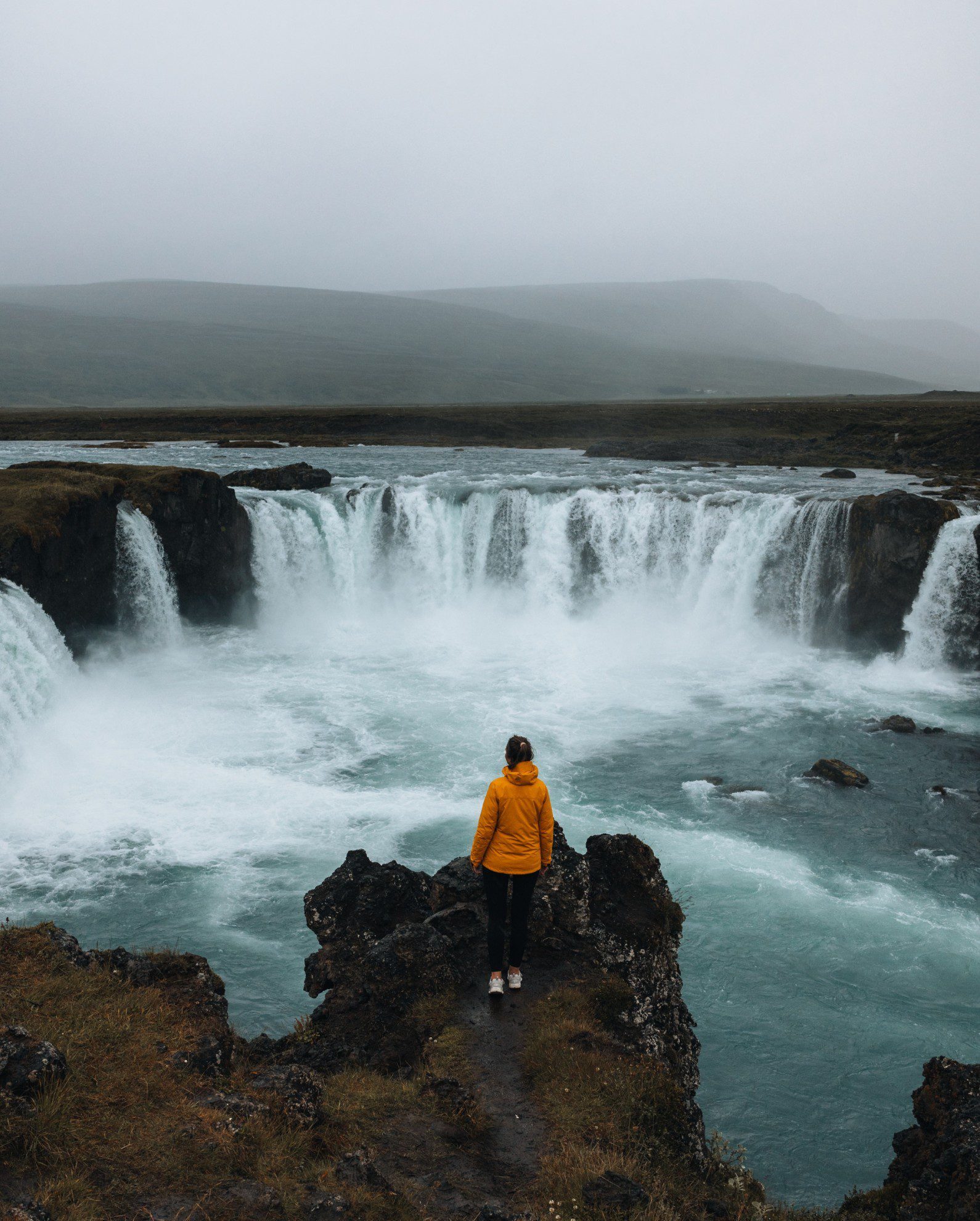
6. Goðafoss: the waterfall of the gods
North of Iceland, Ring Road
Goðafoss, the "waterfall of the gods," gets its name from a historical event. In the year 1000, when Iceland officially adopted Christianity, the pagan leader Þorgeir Ljósvetningagoði threw his idols of the old Norse gods into this waterfall.
30 meters wide and 12 meters high, Goðafoss is neither the tallest nor the most powerful, but its perfect horseshoe shape makes it one of the most beautiful. The turquoise water of the Skjálfandafljót river divides into several arches before plunging down.
Goðafoss is accessible from both sides of the river, offering different perspectives. The East bank provides the classic horseshoe view, while the West bank allows you to get very close to one of the arches.
Easy to access
Goðafoss is directly on the Ring Road between Akureyri and Lake Mývatn. The parking lot is just a 2-minute walk from the waterfall. It is one of the easiest accessible waterfalls in Iceland, perfect for a quick yet memorable stop.
Our practical tips
- Visit both banks: completely different perspectives
- Accessible year-round: stunning in winter with ice
- Quick stop possible: 15-30 minutes is sufficient
- Parking on both sides: free
- Evening light: particularly beautiful at the end of the day
7. Haifoss: the fourth highest waterfall in Iceland
Highlands, South Iceland
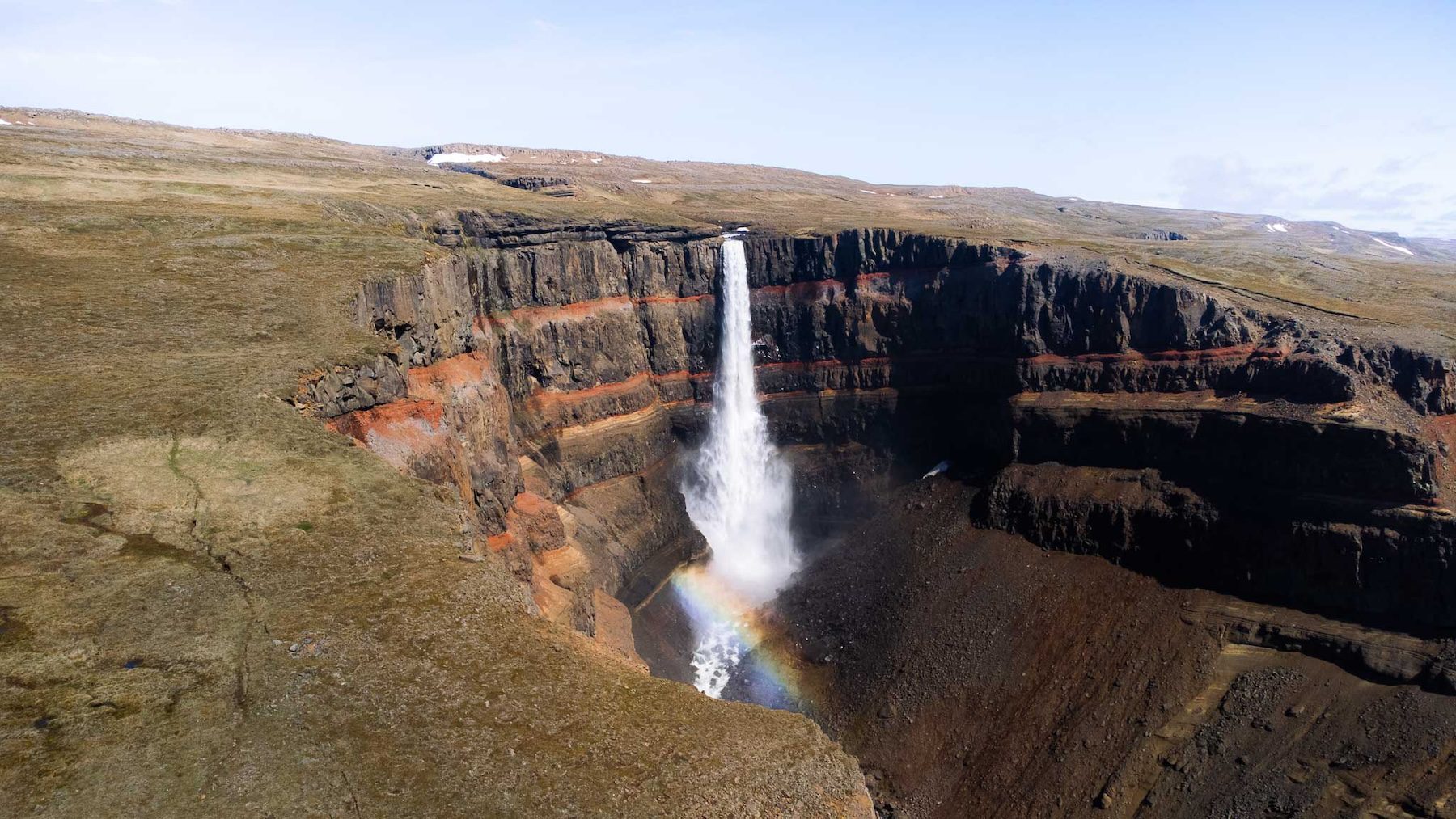
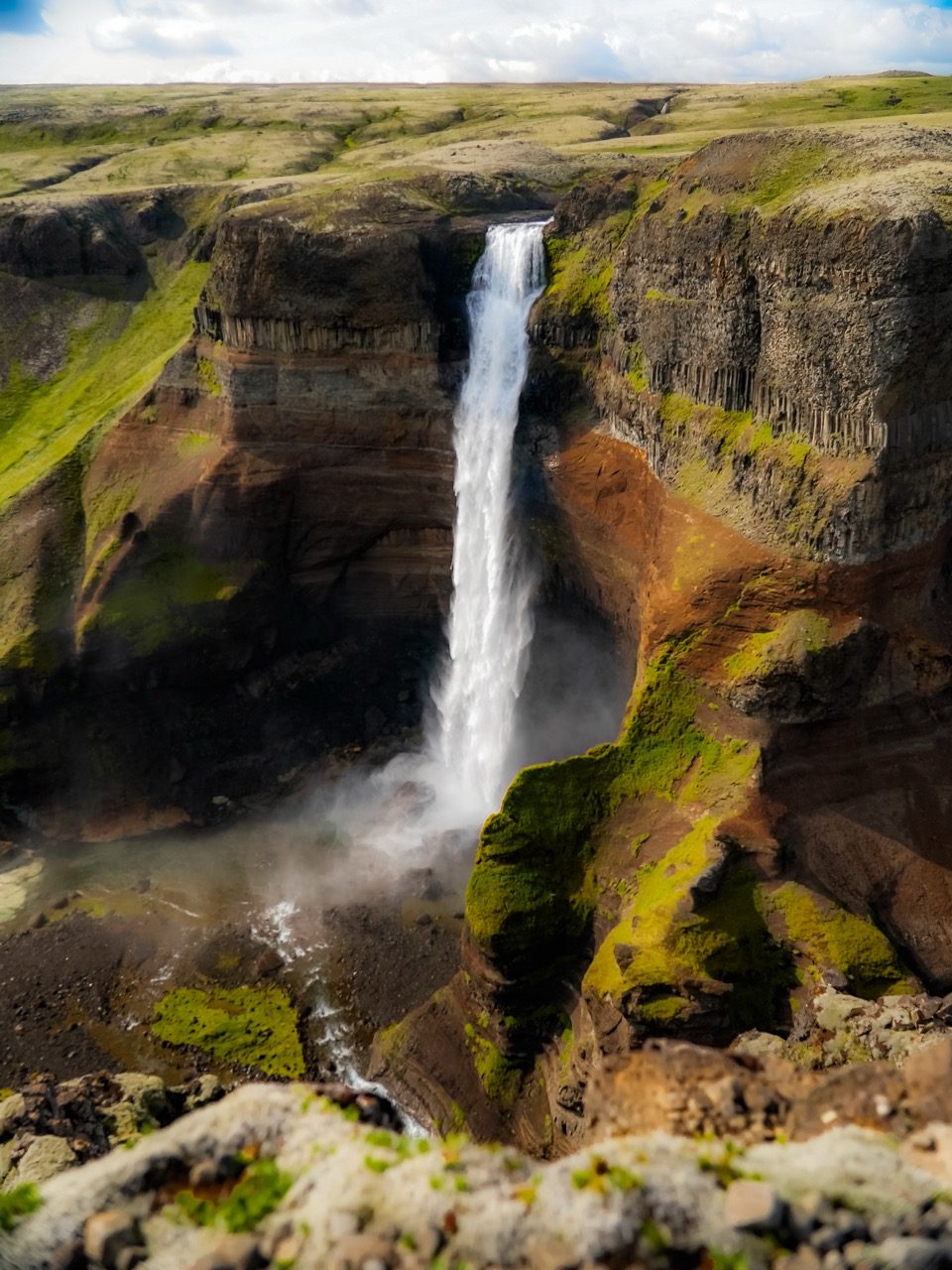
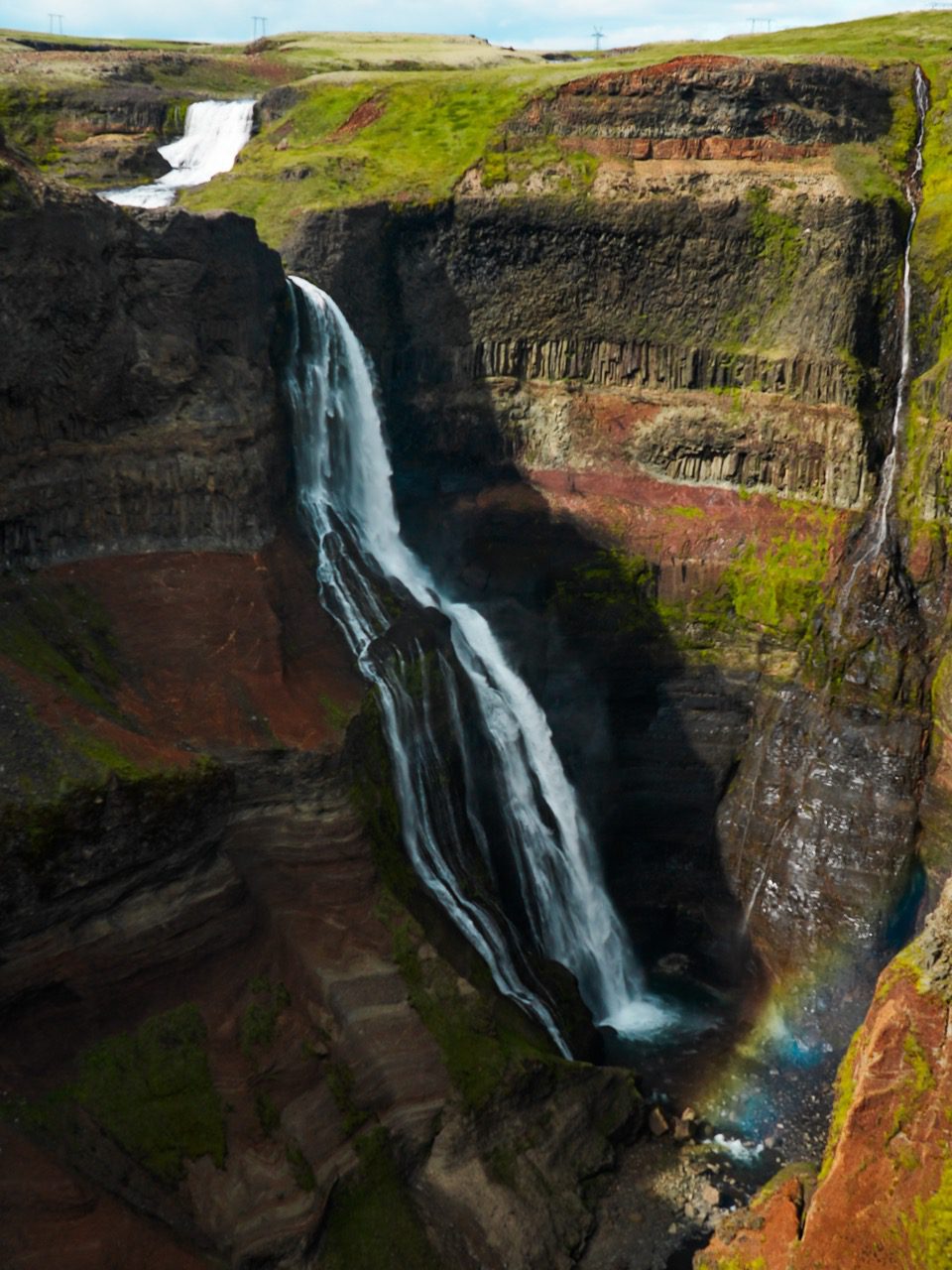
Haifoss plunges 122 meters into the Fossá River Canyon. It is the fourth highest waterfall in Iceland (second or third according to conflicting sources).
What makes Haifoss spectacular is not just its height, but its setting: two twin waterfalls (Haifoss and Granni right next door) that dive into a deep canyon surrounded by colorful mountains. The view from the viewpoint is breathtaking.
Haifoss is still rarely visited because it requires leaving the Ring Road and driving 30 km on a gravel track. But this detour is definitely worth it for those looking for a spectacular waterfall without the crowds.
The Access Road
Route 332 leading to Haifoss is a 30 km gravel track. It can be navigated by a regular car in good weather during the summer, but a 4x4 is recommended. Expect a 45-minute drive from the Ring Road. Don’t attempt access in bad weather, as the track can become impassable.
Our Practical Tips
- 4x4 recommended: the track can be tricky
- Stay away from the edge: the canyon is steep and the rocks are unstable
- Hiking possible: there’s a trail to descend into the canyon (difficult)
- Few people: the track discourages tourist buses
- Accessible June-September: closed the rest of the year
Ready to discover the waterfalls of Iceland?
The waterfalls of Iceland are not just simple cascades. They are forces of nature that shape the landscape, living legends, and ongoing displays of power and beauty.
From the perfection of Skógafoss to the raw power of Dettifoss, from the basalt columns of Svartifoss to the veil of Dynjandi, each waterfall tells a different story of volcanic Iceland.
With a good itinerary, you can easily visit 6-7 of the waterfalls in this top 7 during a week-long road trip. Add all the ones you discover along the way, and you'll return with hundreds of photos and a head full of memories.
So, ready for the trip?