Team Tips
- Ideal Period: May to September, as the campgrounds are open, the roads are accessible, and the summer light is extraordinary.
- Book your campgrounds in advance: In July-August, the best-placed campgrounds fill up quickly. With Iceland Nomads, it’s already taken care of for you.
- Dress in layers: Even in summer, the weather can change in minutes. A waterproof jacket and a fleece are essential at all times.
- Respect Iceland's nature: Iceland is a fragile ecosystem. Vegetation takes decades to regrow, so stick to marked trails and only camp in designated areas.
Camping in Iceland: what you absolutely need to know before you go.
Iceland is one of those countries where sleeping outdoors feels like part of the adventure. Imagine waking up facing a glacier, hearing the rumble of a nearby waterfall, or watching the Northern Lights from your rooftop tent. And that's exactly what you can experience, as long as you know the rules of the game.
Because Iceland is not Norway. Camping here is regulated, and for good reasons: the Icelandic ecosystem is extremely fragile. Here’s everything you need to know to camp in Iceland legally, comfortably, and responsibly.
When is the best time to go camping in Iceland?
The best season
May to September is the ideal window. Campsites open their doors, the roads are passable, and temperatures are manageable: between 8 and 15°C during the day, depending on the region and the month. Not tropical, but perfectly pleasant for exploring.
June and July offer the phenomenon of midnight sun: the sun doesn’t really set, and the constant golden light turns every landscape into a living postcard. It’s also the busiest time: be sure to book your campsites well in advance.
September is a beautiful month: fewer crowds, the first northern lights start to appear, and the autumn colors on the moors are stunning.
This is the season we schedule our Iceland Nomads tours: departures from May to September, to enjoy Iceland in all its lights.
And winter?
Icelandic winter is spectacular for those looking to chase the northern lights. But for a camping road trip, it’s a different story: most campsites close, temperatures can drop to -10°C, and F-roads (highland roads) are closed. Save that for an experienced adventure.
Camping regulations in Iceland
What is allowed and what is not
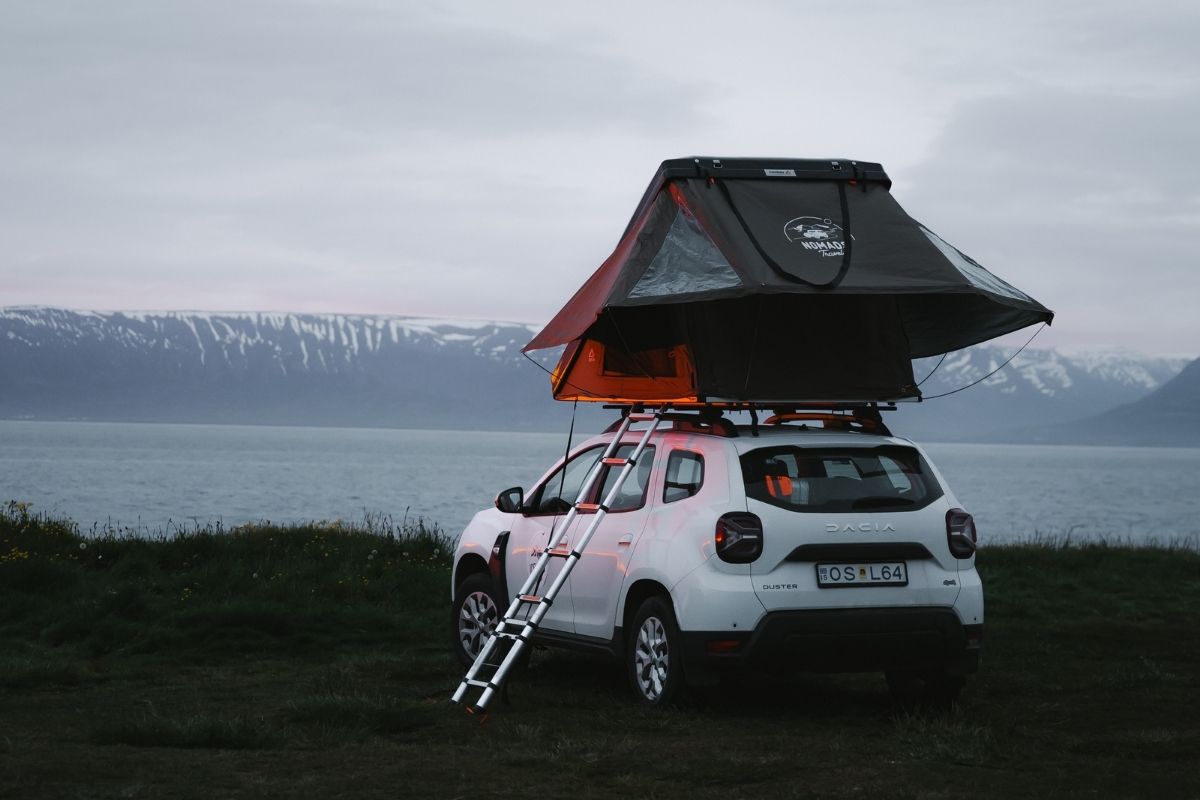
Unlike Scotland or Norway, wild camping is prohibited in Iceland. This is a recent rule (2015) and it is enforced seriously. The reason is simple: Icelandic moss and vegetation can take up to 50 years to regrow after being trampled. A poorly placed wild campsite can leave visible marks for decades.
In practice, you must camp in official campgrounds or on private land with the owner's permission. Fines for wild camping can reach several hundred euros.
Particularly protected areas
The national parks of Þingvellir, Skaftafell, and Snæfellsjökull have their own dedicated campgrounds: use them. Outside marked areas, it is prohibited.
Key principle to remember
Iceland has an exceptional network of campgrounds, well-distributed along the Ring Road, often in spectacular settings. You don’t need to wild camp to have an amazing experience; the official campgrounds are more than enough.
The official campsites in Iceland
An exceptional network
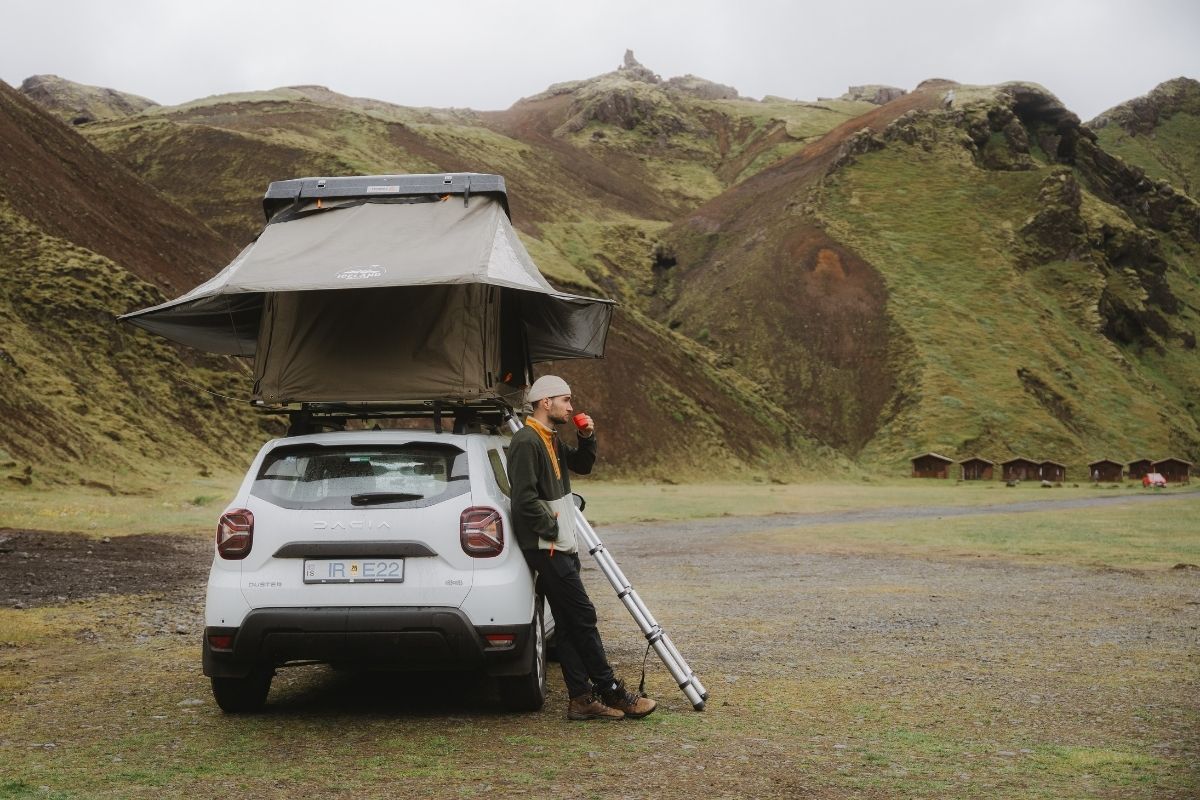
Iceland has over 170 official campsites spread along the Ring Road and in remote areas. Most are open from May to September, with some open year-round. They offer hot showers, toilets, electrical outlets, and often a communal kitchen.
And often, they are located in extraordinary spots: at the foot of a glacier, facing a waterfall, by a lagoon. Official camping in Iceland is far from a compromise.
What it Costs
Expect to pay 12–20 € per person per night at most campsites. Campsites in very touristy areas (Vík, Skaftafell, Þingvellir) may be a bit more expensive.
The Camping Card: What You Need to Know
The Camping Card is a prepaid card that gives access to over 50 partner campsites for two people for 28 nights. It costs around 170 € per card. If you're doing a long circuit, it can be worth it, but for 7 or 10 days, calculate based on your itinerary.
With Iceland Nomads, your camping nights are included in the price. So you won’t have to worry about that.
Roof tent or converted van: what to choose in Iceland?
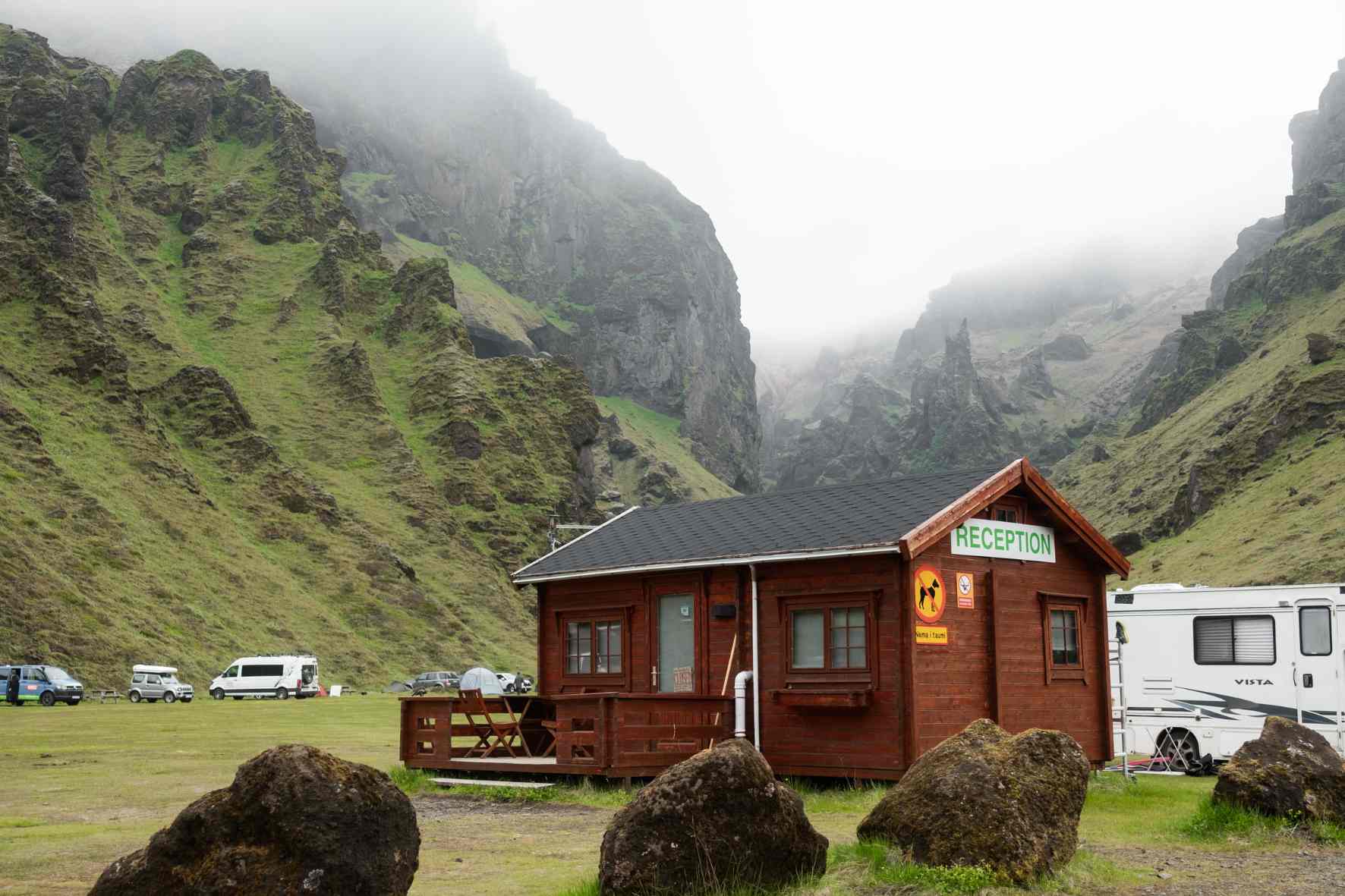
The 4x4 with rooftop tent
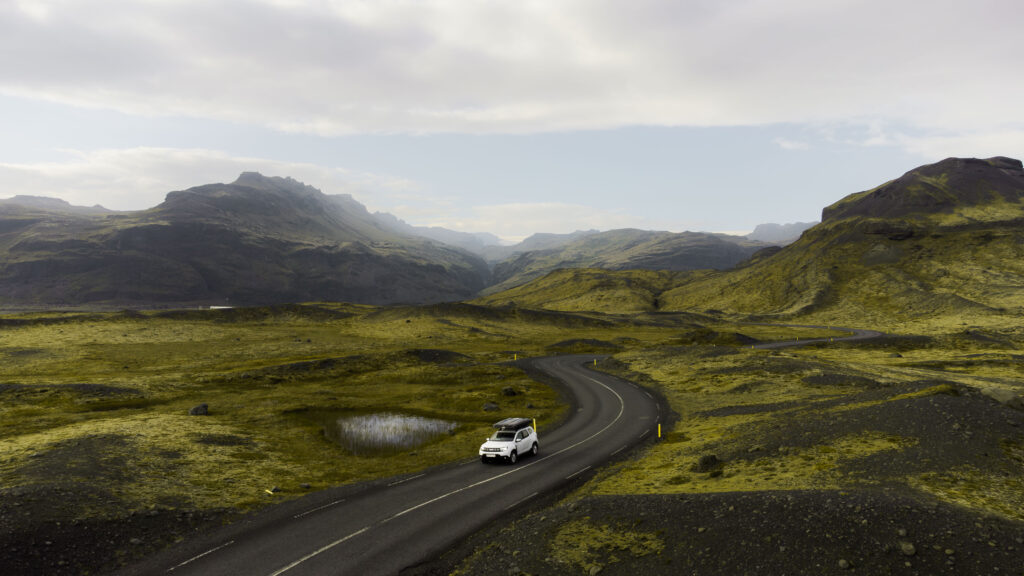
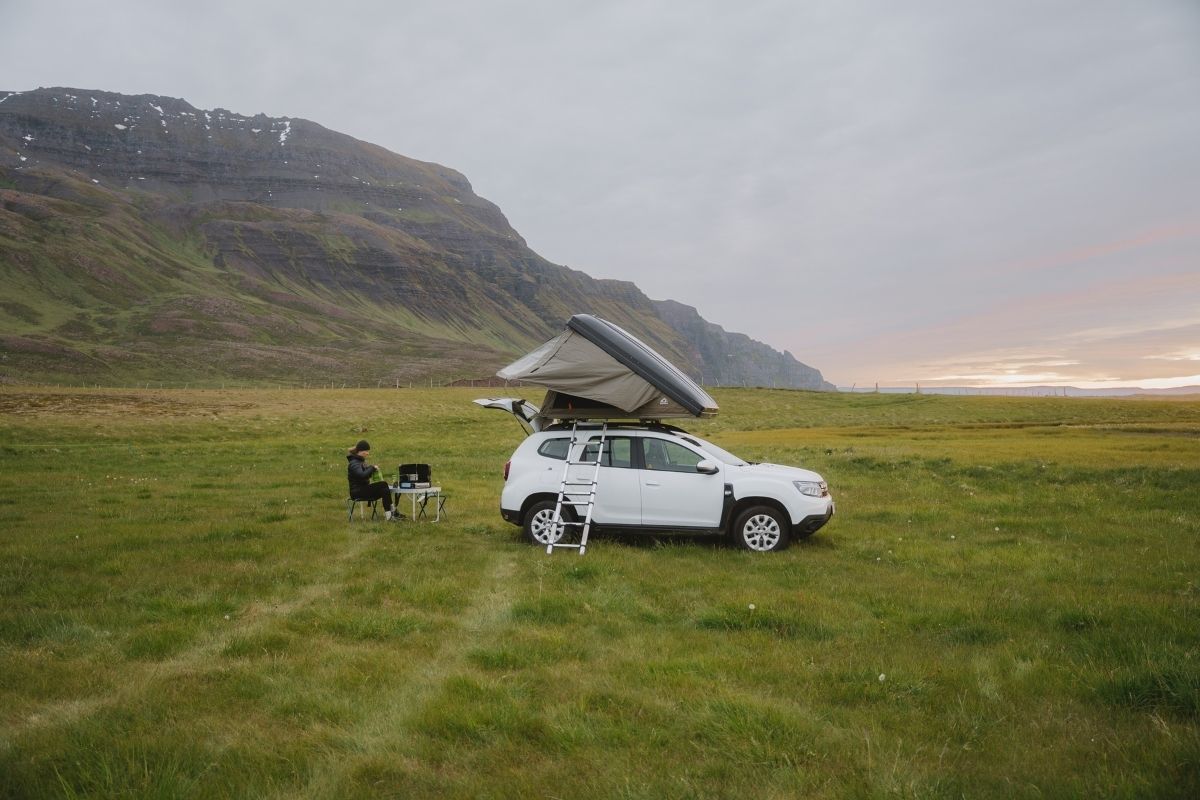
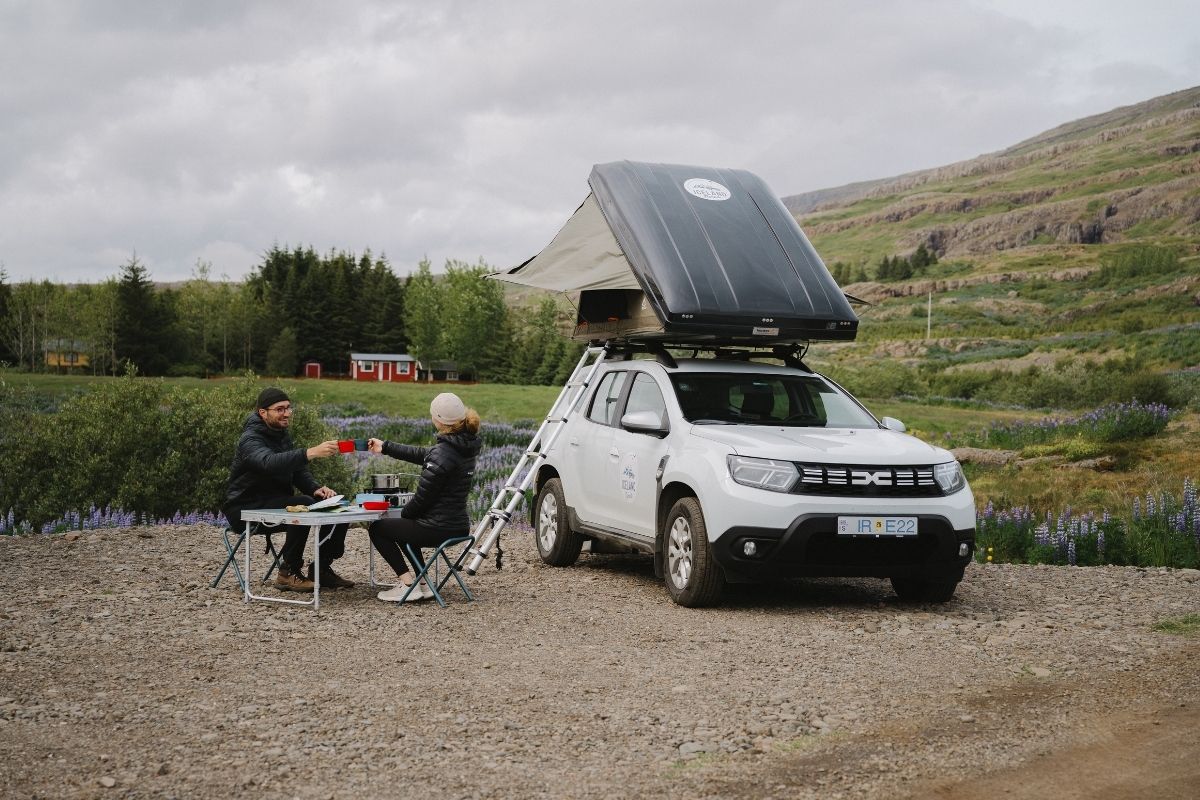
This is the iconic option for Iceland, and for good reason. The 4x4 gives you access to the F-roads of the highlands: unpaved roads, sometimes fording rivers, that lead to completely wild landscapes that you can't reach otherwise. The rooftop tent sets up in two minutes, keeping you off the cold ground, and you wake up with a view right from your bed.
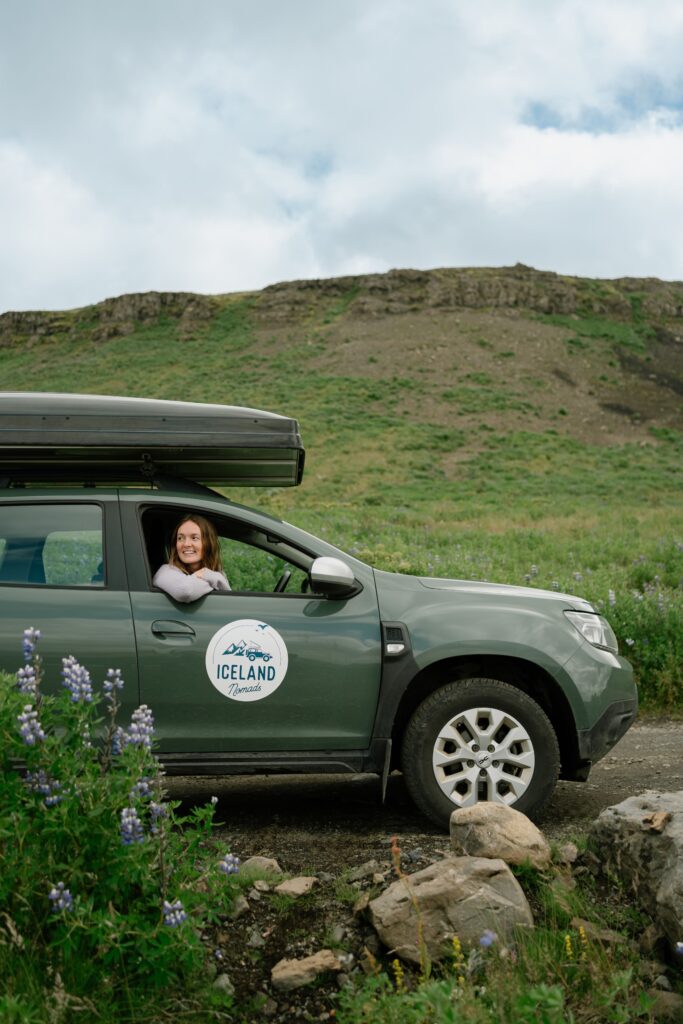
This is the choice we recommend for those who want to explore the island as far as possible, and it's the main option offered by Iceland Nomads.
The camper van
Iceland Nomads also offers a camper van option: more spacious inside, with a real sliding kitchen, a fixed double bed, and a stationary heater for the chilly nights. Ideal if you prioritize indoor comfort. Note that the van cannot take the F-roads; it stays on the paved network, which already covers the vast majority of the must-sees.
Both options include complete kitchen equipment, sleeping bags, and everything you need for a week of self-sufficiency.
The best campsites in Iceland
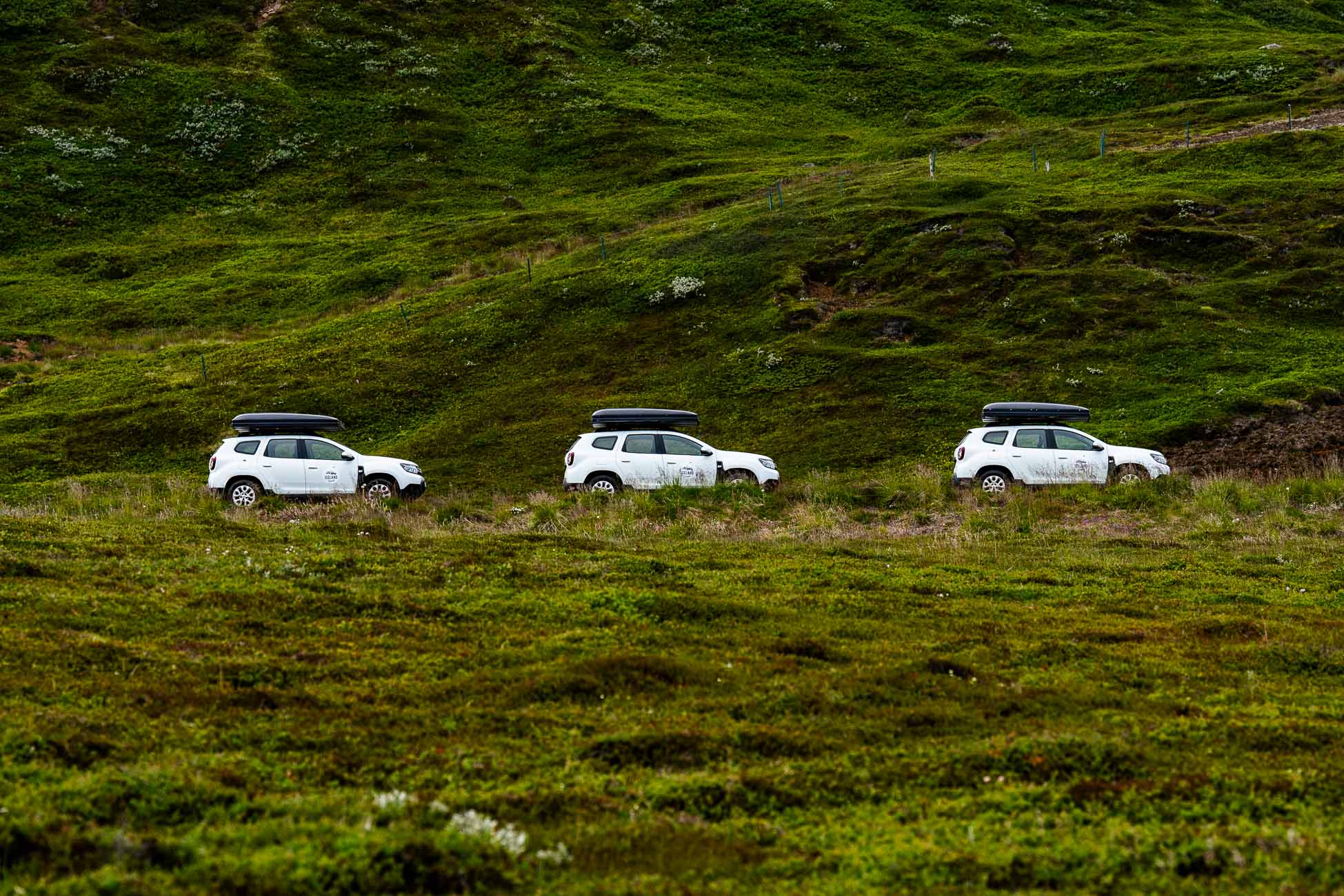
Vík
The Vík campsite is one of the best located along the Ring Road. Situated right in front of the black sand beach of Reynisfjara, with the Reynisdrangar sea stacks rising from the Atlantic on the horizon. In the morning, if the weather is clear, the view from your rooftop tent is unreal.
Skaftafell (Vatnajökull National Park)
The Skaftafell campsite is an ideal starting point for glacier hikes and strolls through the birch forest. It’s one of the largest campsites in Iceland — well-equipped, with hot showers and a communal kitchen.
Jökulsárlón
There’s no camping directly at the glacier lagoon, but the Höfn campsite, about an hour's drive away, is a good base. In the morning, head back to Jökulsárlón before the tour buses arrive — you’ll have the icebergs almost to yourself.
Þingvellir
Þingvellir National Park is one of the most important sites in Iceland — a UNESCO World Heritage site, it's where the rift between the American and Eurasian tectonic plates can be found. The campsite is well-equipped, and the site is extraordinary, especially in the evening when the day-trippers have left.
Mývatn
In the north, the Mývatn campsite is surrounded by unique geothermal formations: craters, steam vents, lava fields. It’s one of the most otherworldly areas in all of Iceland — sleeping here is an experience.
Essential gear for camping in Iceland
What you absolutely must have
A quality raincoat: In Iceland, rain can come at any time, from any direction, including horizontally. A good Gore-Tex raincoat is an investment that will save you.
Thermal layers: Even in July, temperatures can drop to 5°C at night, and the wind makes it feel even colder. Layer up: technical underwear, fleece, raincoat.
Waterproof shoes: Icelandic trails are often muddy or crossed by streams. Waterproof hiking boots are essential.
Sunblock: Counterintuitive, but with 20 hours of daylight in June, the exposure is massive. Don’t underestimate the Icelandic sun.
What Iceland Nomads already includes
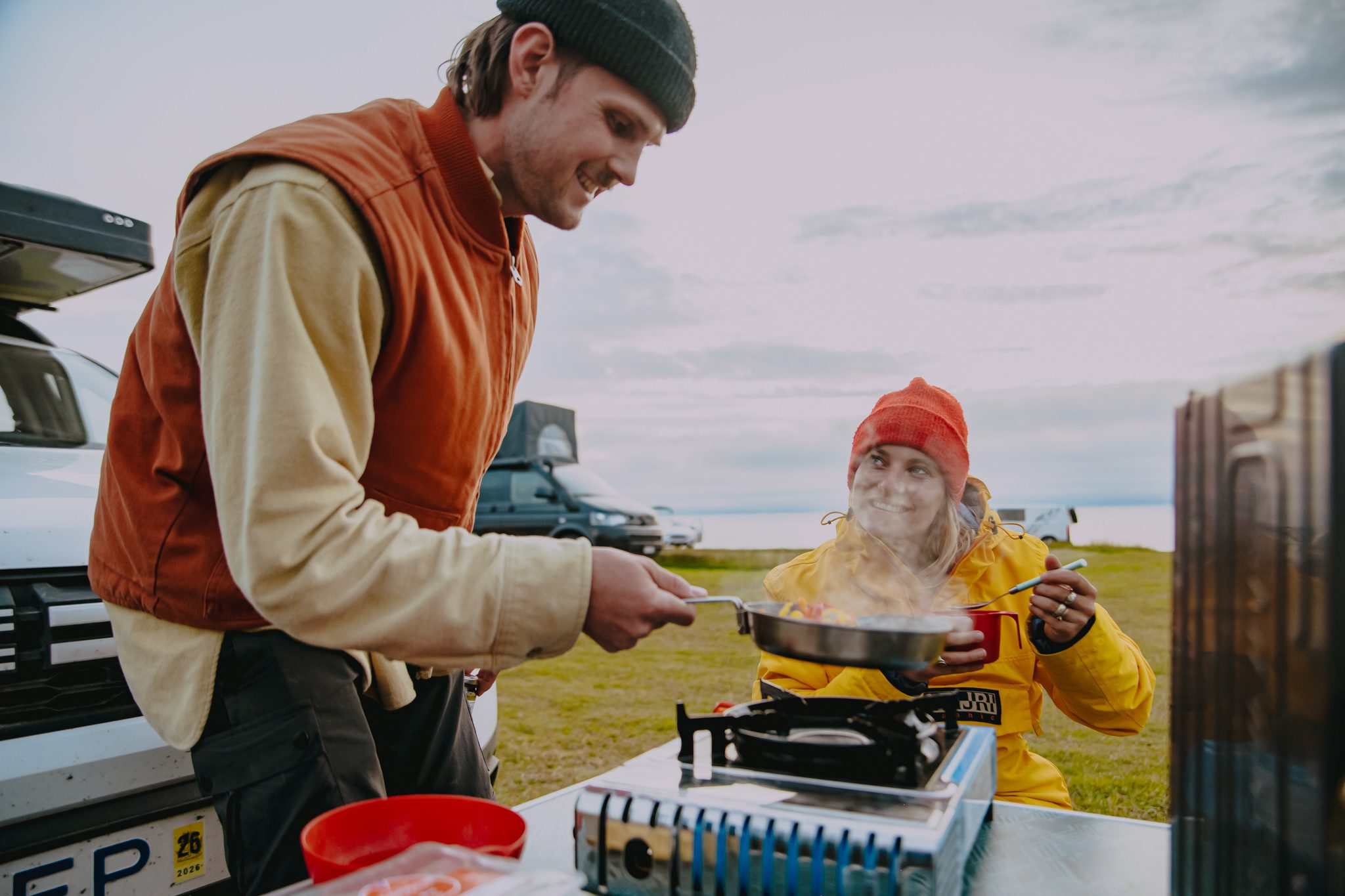
With our package, camping gear is fully provided: mattresses, sleeping bags suitable for Icelandic temperatures, pillows, as well as all cooking equipment (stove, pots, plates, bowls). You just arrive with your personal luggage, and we take care of the rest.
Logistics and supply
Where to Shop in Iceland
Reykjavik is your best option for stocking up before you head out. The chains Bónus (the cheapest), Krónan, and Nettó are the most accessible. Load up on supplies right from the start. Outside the capital and major towns like Akureyri or Selfoss, grocery stores become rare and prices go up.
In the small villages along the Ring Road, you'll often find a Samkaup or a local supermarket, but the selection is limited and prices are higher.
Water
It's excellent everywhere in Iceland: among the best in the world, straight from glaciers and volcanic springs. Bring a reusable water bottle; you'll never need to buy bottled water.
Connectivity
The mobile network is surprisingly good along the Ring Road, with 4G in most populated areas. In the highlands (F-roads) and some remote fjords in the East, you might lose the signal. The Iceland Nomads app works with a downloadable offline map, handy for those white zones.
Camping in Iceland with Iceland Nomads
If you want the camping experience in Iceland without the logistics, that's exactly what Iceland Nomads offers. A fully equipped 4x4 with a rooftop tent (or a camper van), your camping nights included and pre-booked at carefully selected spots along the Ring Road, a detailed road book, and assistance available throughout your trip.
You arrive in Reykjavik, pick up the keys, and your Icelandic adventure starts right away.